Friction Tunnel System
StarWash Tunnel Car Wash Brushes are engineered for high-volume operators who need speed, reliable performance and consistent cleaning across every wash cycle. The complete friction tunnel system combines a nine-brush configuration, electric trailing arms, a continuous belt conveyor, chemical application, high-pressure rinsing and a powerful drying system.
Available in tunnel lengths from 40 to 150 feet, the system can be configured around your site, projected traffic and business model. A properly designed StarWash tunnel can process more than 100 cars per hour while supporting lower labor requirements, dependable uptime and repeatable wash results.
Complete System Friction Tunnel
This is more than a collection of car wash brushes. It is an integrated equipment platform that brings the wash tunnel, entrance kiosk, payments, memberships, lighting and operator technology together.
StarWash Tunnel Arches
Friction Tunnel High-Volume Operation
Digital Arch
A friction tunnel car wash uses controlled contact, specialised brush materials and sequential cleaning stages to remove road film, brake dust and stubborn surface contamination. For express wash operators and high-demand sites, this creates a strong balance between vehicle throughput, cleaning performance and cost per wash.
Unlike a stationary in-bay automatic, a conveyor tunnel system moves vehicles continuously through each wash stage. One car can enter while other vehicles are being washed, rinsed or dried. This continuous wash operation helps operators reduce queues and serve more customers during peak periods.
What You Gain
StarWash systems are available in configurations ranging from compact 40-foot layouts to 150-foot tunnels for high-volume operations. The belt conveyor maintains predictable vehicle spacing as each car moves through the wash.
Electric motors, variable-speed controls and a Mitsubishi PLC coordinate the brush, chemical, rinse and drying equipment for repeatable results.
A carefully configured system can help operators:
Automated tunnel washes lower labor, utility, and cost-per-wash requirements. Integrated controllers automate washing steps while all-electric motors eliminate hydraulic leak risks and simplify maintenance.
Additionally, precise chemical application controls fluid usage, variable-speed equipment adapts to demand, and reverse-osmosis technology supports a cleaner final rinse.
These efficiencies can support:
Sustainability is at the core of modern automatic car wash systems. Our tunnel car wash solutions incorporate water-efficient nozzles and eco-friendly cleaning technologies to reduce water consumption while delivering exceptional results.
Advanced water reclamation systems filter and recycle water, cutting waste and lowering costs without compromising on performance. Choosing a car wash tunnel with optimized water management not only benefits the environment but also enhances operational efficiency.
Brush Configuration
The standard StarWash friction wash system uses nine tunnel car wash brushes positioned to clean the upper, side, lower and wheel areas of each vehicle.
Each brush has a specific role. Together, they provide overlapping coverage that helps reduce missed surfaces while maintaining continuous vehicle movement.
The configuration includes:
The top brush cleans horizontal surfaces, following different vehicle heights without excessive contact pressure. Four tall brushes handle the front, sides, and rear, combining rotational motion with presoak chemistry to lift road film. Coordinated through the tunnel controller, the system maintains consistent contact along the conveyor, ensuring effective, uniform cleaning across cars, SUVs, and light trucks.
Lower vehicle areas gather tough contamination like brake dust, mud, and road debris. Two rocker-panel brushes clean lower doors and side skirts, while two dedicated wheel brushes scrub wheel faces and tires on the conveyor. Working alongside specialized chemistry and high-pressure rinsing, this targeted equipment ensures a thorough finish that enhances premium wash offerings.
Modern brushes use controlled movement instead of aggressive force. Soft, closed-cell foam material glides over surfaces, holding water and wash solution. Electric trailing arms guide the brushes smoothly along vehicle contours, with adjustable pressure and speed. Routine maintenance keeps materials free of grit, while proper chemical application pre-loosens dirt to protect delicate paint.
A tunnel should be designed around your available space, expected volume, wash packages and growth plan. StarWash can help you compare equipment layouts, conveyor options and financing before your build or retrofit begins.
Complete Platform
Brush performance is only one part of a profitable tunnel. Effective cleaning depends on how the conveyor, chemicals, pressure equipment, water treatment, controllers and dryers work together.
StarWash engineers the complete tunnel car wash system as one coordinated platform. This reduces the complexity of combining equipment from disconnected vendors and gives operators a clearer path from vehicle entry to final drying.
Included with the StarWash tunnel package, the belt conveyor offers single or dual configurations from 24 to 28 inches. Vehicles ride directly on the moving surface, eliminating traditional chain-and-roller risks like scratched wheels while simplifying entry for low-profile tires or wide wheelbases.
Synchronized with the wash equipment, the conveyor activates arches and brushes at precise intervals, while variable-speed controls allow operators to easily balance throughput with specific package requirements.
A complete cleaning cycle begins before the first brush makes contact.
The two-step presoak system applies separate chemical solutions designed to break down organic material and road film. Triple foam adds visible coverage and creates a premium customer experience while supporting the friction cleaning process.
After the brush stages, high-pressure pumps power the rinse equipment. The standard package can include:
An 8.81-gallon-per-minute reverse-osmosis system supports spot-free finishing by reducing dissolved minerals in the final rinse water. Accurate chemical dosing and water management can also help operators control operating costs without weakening wash quality.
Contouring housings and air guides direct powerful airflow onto vehicle surfaces. Variable-speed controls coordinate dryer output with conveyor speed and wash packages. Beyond performance, the satin-black blower housings complement the tunnel design.
When paired with intelligent accent lighting, they transform functional utility equipment into a sleek feature that elevates the overall customer experience.
Wash Technology
A successful express tunnel must manage more than the physical wash. Operators also need a fast entry process, secure payments, membership identification, wash-package controls and visibility across daily performance.
StarWash integrates this technology with the equipment rather than treating it as a separate system.
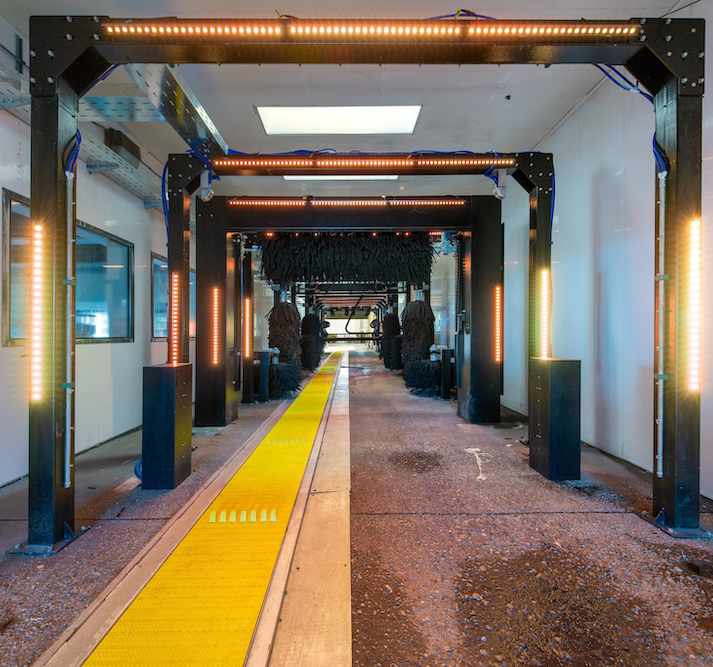
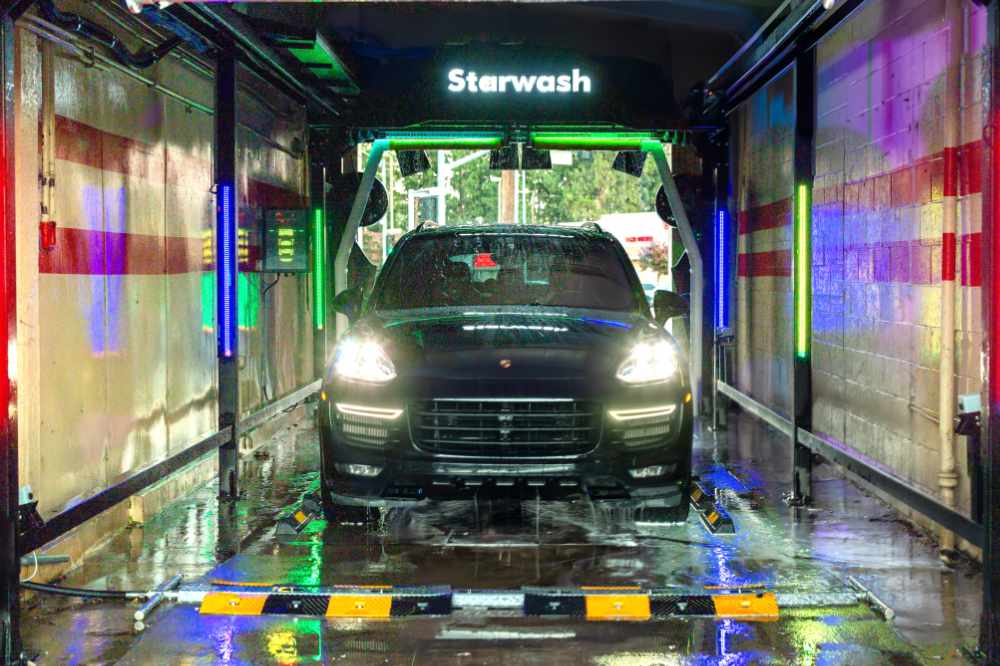
The LED entry arch creates a high-visibility first impression before the wash begins. Thirteen high-resolution panels can display promotional messages, wash-package information and driver instructions.
When a vehicle enters the tunnel, the system changes from advertising mode to wash guidance. The display can be synchronized with five LED accent bars per arch throughout the tunnel.
Integrated lighting helps operators:
Additional environmental lighting and outdoor digital signage can be configured to match the site and brand.
The StarWash entrance kiosk uses a 22-inch capacitive touchscreen designed to create a clear, premium entry experience. Customers can review wash packages, select upgrades and enrol in membership options before entering the tunnel.
Membership technology helps turn occasional customers into recurring customers. A faster entry process also helps protect tunnel throughput during peak periods.
The StarWash express kiosk is designed for fast, self-service checkout that keeps vehicles moving during high-demand periods. Customers can select a wash and complete payment without creating unnecessary delays at the tunnel entrance.
Integrated payment options include:
The streamlined checkout process helps reduce queues, protect tunnel throughput and make it easier for customers to complete a purchase from their phone or payment card. Express kiosk transaction pricing starts at 2.85% per transaction.
A friction tunnel is typically the strongest option for operators prioritising high throughput and deep physical cleaning. Some customers, however, prefer a brush-free wash for delicate finishes, specialist vehicles or personal preference.
StarWash offers touchless car wash equipment for operators who want high-pressure, chemical-based cleaning without brush contact:
A hybrid tunnel combines friction and touchless equipment in one system. This allows operators to offer different cleaning methods, strengthen premium packages and serve a wider range of customer preferences.
Build With StarWash
StarWash brings tunnel equipment, software, payments, memberships, installation, training and operator support together. Build your system around real site requirements instead of combining disconnected products and vendors.