


.webp)

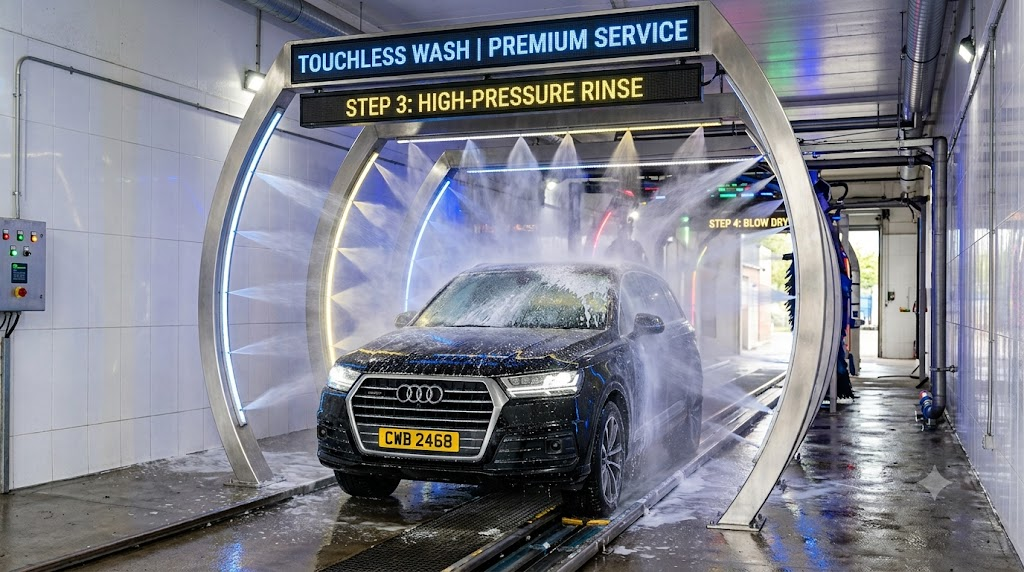
For car wash operators and investors, choosing the right equipment is critical to driving throughput and protecting profit margins. As vehicle owners increasingly prioritize paint safety, touchless car wash systems have become a dominant market demand. By eliminating brushes and cloth strips, these advanced machines use high-pressure water, precision sensors, and calibrated chemistry to deliver a spotless clean without physical contact.
Whether you are upgrading an existing bay or building a new site, understanding how touchless technology works is the first step toward meeting customer expectations and growing your business.
What Is a Touchless Car Wash?
A touchless car wash is an automatic car wash that cleans a vehicle without brushes, cloth strips, foam rollers, or other physical contact. Instead of scrubbing the paint finish, a touchless wash uses high-pressure water, soap, pre-soak chemistry, rinse cycles, and forced air drying to remove dirt, grime, road salt, pollen, and surface debris. For drivers, the appeal is simple: a cleaner vehicle with lower scratch risk than many friction-based wash options.
How Touch-Free Car Wash Systems Avoid Physical Contact
A touch-free car wash avoids direct contact with the vehicle’s exterior. Traditional soft-touch car wash equipment relies on brush contact or cloth contact to loosen contaminants. A touchless car wash system uses nozzles, sensors, cleaning agents, and precise spray patterns instead.
This makes touchless washing a highly profitable, popular option. Drivers get the clear coat, mirror, and delicate trim protection they demand, while operators benefit from a high-throughput system ideal for routine maintenance.
Why High-Pressure Water and Cleaning Agents Matter
Because there is no scrubbing action, a touchless car wash depends heavily on high-pressure water and well-calibrated cleaning agents. The soap and pre-soak help loosen dirt, grease, bugs, and other contaminants. Then the high-pressure rinse removes what has been broken down from the vehicle surface.
The quality of the wash depends on several factors:
- Proper detergent strength and dwell time
- Accurate nozzle distance from the vehicle contour
- Strong but controlled water pressure
- Effective rinse coverage across hard-to-reach areas
- A final drying stage that limits streaks and water spots
When these elements are balanced, a touchless wash can deliver a quick exterior clean without the friction that some drivers worry about.
Boost your revenue by offering the premium, scratch-free wash options modern drivers demand
How Does a Touchless Car Wash Work?
A touchless wash follows a controlled process. The vehicle enters the wash bay, the system measures its shape, and the equipment applies soap, rinse water, and drying air in stages. The goal is to clean the vehicle thoroughly while avoiding brushes or cloth applicators.
Step 1: Sensors Measure the Vehicle Contour
Modern touchless systems use sensors to measure the vehicle contour. These computerized systems help the equipment understand where the vehicle is positioned, how tall it is, and how close spray nozzles should be.
This matters because a pickup truck, compact car, SUV, and van all have different shapes. If the nozzles are too far away, the wash may lose cleaning power. If the spray is too close or poorly aimed, the system may not deliver even coverage. A well-designed single arm touchless car wash system or dual arm touchless car wash machine uses sensors and programmed movement to improve consistency.
Step 2: Pre-Soak, Soap, and High-Pressure Rinse Remove Dirt
Most touchless car washes begin with a pre-soak or chemical pre-soak. This stage helps loosen dirt, road debris, brake dust, grease, and organic contaminants before the rinse cycle begins. Soap or foam application then supports the cleaning process by lifting grime from the surface.
A simplified touchless wash process usually looks like this:
- The vehicle enters the wash bay and stops in the correct position.
- Sensors scan or measure the vehicle.
- Pre-soak and soap are applied to loosen contaminants.
- High-pressure water sprays the exterior from multiple angles.
- A fresh water or spot-free rinse removes soap residue.
- Forced air drying helps reduce streaks and water spots.
This process gives drivers a fast, low-contact cleaning option, especially when the vehicle is lightly soiled or regularly maintained.
Step 3: Spot-Free Rinse and Forced Air Drying Finish the Wash
The final rinse is important because leftover soap or chemical residue can leave streaks. A spot-free rinse uses treated water to reduce mineral deposits that can create visible water spots after drying.
Forced air drying then pushes water away from the vehicle’s surface. It may not remove every drop from mirrors, seams, handles, roof racks, or hard-to-reach areas, but it helps finish the wash without towel contact. For drivers who want extra shine, some wash packages may include wax, polish wax, tire shine, protectant, or drying aid.
Maximize your throughput with Star Wash equipment engineered for speed and flawless precision
Learn More About Our Car Wash Options
Touchless Car Wash vs Soft-Touch Car Wash
Touchless and soft-touch washes are both types of automatic car wash systems, but they clean in different ways. A touchless car wash uses high-pressure water and chemical cleaning. A soft-touch car wash uses friction from brushes, cloth strips, or foam applicators.
Frictionless Washing vs Brush and Cloth Contact
Frictionless washing minimizes physical contact with the vehicle, virtually eliminating the risk of scratches, swirl marks, or damage caused by trapped debris. For that reason, drivers actively seek out touchless options to protect their clear coat and exterior accessories, giving operators a powerful marketing advantage and reducing vehicle damage liability.
While soft-touch systems can be highly effective at scrubbing heavy grime, they require intensive maintenance to ensure brushes remain clean. For operators, a touchless system reduces this mechanical upkeep and minimizes the risk of a dirty brush damaging a customer’s vehicle.
Ultimately, the choice isn't simply "touchless vs. soft-touch", it depends on your site's maintenance capacity, local throughput goals, and the typical condition of the vehicles you serve.
Which Automatic Car Wash Is Better for Paint Finish?
For paint finish protection, a touchless wash is often the safer choice because it avoids brush contact. However, if a vehicle has caked-on mud, tar, salt buildup, or greasy road film, touchless washing may not remove everything in one pass.
A touchless car wash machine is usually best for regular exterior cleaning and lower-contact maintenance. A tunnel car wash system or hybrid wash tunnel system may be better for operators who want higher throughput or a mix of cleaning methods.
Lower your operational liability and maintenance costs with our advanced, brushless systems
Is a Touchless Car Wash Safe for Your Vehicle?
A touchless car wash is generally safe for most vehicles when the equipment is properly maintained and the chemistry is correctly calibrated. The main benefit is that the wash does not rely on brushes, cloth strips, or foam rollers rubbing against the paint.
Lower Scratch Risk for Clear Coat and Paint Protection
The biggest advantage of touchless washing is reduced scratch risk. Since there is no direct physical contact, there is less chance that trapped dirt, sand, or grit will be dragged across the clear coat.
This makes touchless car washes useful for:
- Newer vehicles with sensitive paint finishes
- Cars with ceramic coating or paint protection products
- Vehicles with loose trim, mirrors, or exterior accessories
- Drivers who want quick exterior cleanups between details
- Regular maintenance after rain, pollen, dust, or light road debris
Touchless washing also helps drivers avoid the uncertainty of shared brushes that may have cleaned heavily soiled vehicles earlier in the day.
Where Touchless Washing May Struggle With Grime
The limitation is that touchless washing cannot physically scrub. Heavy grime may need extra attention. Hard-to-reach areas around wheels, lower panels, mirrors, roof rails, and rear bumpers may also hold residue after a standard wash.
This does not make touchless washing ineffective. It means expectations matter. A touchless wash is excellent for routine maintenance and a cleaner exterior, but occasional detailing, bug removal, road salt removal, or hand washing may still be needed after winter, long road trips, or heavy contamination.
Attract high-end clientele with unbeatable paint-safe technology that guarantees repeat business
Keep Your Vehicle Cleaner With Star Wash
Star Wash designs car wash systems for operators who want reliable performance, modern technology, and flexible equipment options. If your business is comparing touchless, tunnel, or hybrid systems, the right setup can help you match your customers’ expectations and your site’s wash goals.
Use Touchless Washing Between Details
Touchless washing works well between details because it removes common surface debris without adding brush contact. For drivers, that means a practical way to maintain a cleaner vehicle. For operators, it means offering a service that speaks directly to customer concerns about paint damage, scratches, convenience, and speed.
Star Wash supports different equipment needs, from compact touchless systems to larger automatic car wash tunnel equipment. Operators can also review the StarWash car wash technology platform to understand how system controls, payment integration, and monitoring support daily performance.
Get a Convenient Clean Without Brushes
A touchless system gives customers a convenient clean without brushes, which can be a strong selling point for drivers who care about low-contact cleaning. It is also useful for businesses that want to offer a brushless car wash option alongside other services.
For operators planning a new site or upgrading existing equipment, Star Wash also offers car wash equipment financing options. That can make it easier to invest in touchless, tunnel, or hybrid car wash equipment without delaying growth.
Ready to upgrade your site? Explore Star Wash financing and flexible equipment packages today