


.webp)

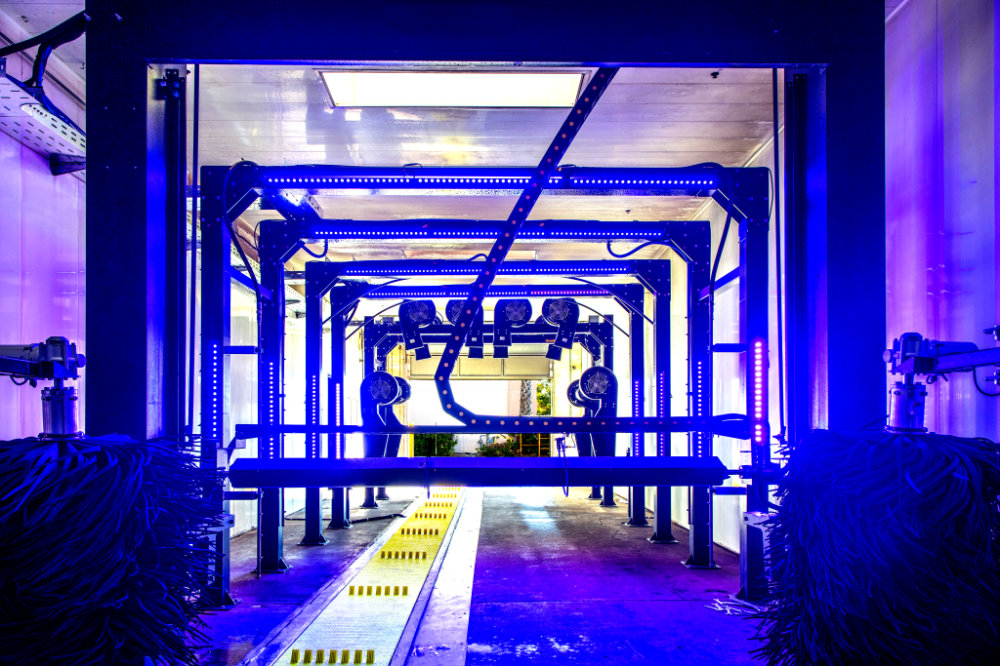
Few decisions shape a car wash business more than tunnel length. The number you commit to influences how many cars per hour you can wash, how much capital you put at risk, what your site can hold, and which customer segments you can serve. Choose too short and you cap your revenue. Choose a longer tunnel than your traffic flow can fill and you waste capital.
This guide walks through how to determine and select the right car wash tunnel length, explains the major length ranges, and shows how modern equipment design and automation have changed the math operators relied on for decades to build efficient, profitable washing businesses.
What Determines the Right Car Wash Tunnel Length?
Tunnel length is never a single decision. It's the product of three variables: your site, your demand, and your business model. The International Carwash Association and equipment manufacturers consistently point to the same factors when advising new operators on tunnel sizing and site selection.
Every tunnel, regardless of length, performs the same core sequence on a moving conveyor belt: pre-soak, soap application, friction or touchless cleaning, rinse, wax application, drying with high-velocity blowers, and finishing options like tire shine or undercarriage wash. How much length each stage gets depends on your wash quality target and equipment package.
Site Footprint, Shape, and Traffic Flow Constraints
Your site footprint is the hard ceiling on tunnel length. Long tunnels need rectangular sites with clear in-feed and out-feed stacking room. Square or irregular lots almost always force a shorter build. Beyond raw square footage, traffic flow matters: customers need to enter, queue, exit, and access vacuum stations without crossing paths.
Limited space in urban locations and expensive real estate often dictate a more compact tunnel. Sharp turns, three-point turns, and crossing exit lanes signal a layout problem no tunnel length can fix. Walk the site or model it in CAD to confirm vehicles move through cleanly at peak hours.
Target Throughput and Cars-Per-Hour Goals
Tunnel length and throughput are mathematically linked. A common industry rule of thumb says a foot of conveyor length roughly equals one car per hour of capacity, though modern equipment has pushed that ratio higher with better cleaning efficiency. Operators evaluate their annual volume target first, then back into the peak hour capacity required. A local distributor or chemical manufacturer can validate these numbers for your market.
If your projected annual volume is 75,000 washes, your peak hour will run around 70 cars per hour, suggesting a 70 to 90-foot car wash tunnel size. A site projecting 130,000 washes annually needs to handle roughly 125 cars per hour at peak, which usually requires 100 to 125 feet of conveyor system. Match the length to the volume, not the other way around.
Tunnel Length Ranges Explained, From Mini-Tunnels to Express Conveyors
Most tunnel car washes fall into one of three length brackets. Each range maps to a different business model, capital commitment, and throughput ceiling. Starwash builds tunnel systems from 40 feet to 150 feet, covering every range below.
Mini-Tunnels (35–60 Feet): Compact High-Volume Solutions
A mini-tunnel can be as short as 35 feet, with common configurations starting at a 40-foot tunnel. Modern compact tunnel systems run on a chain conveyor or belt conveyor that delivers real throughput in spaces that previously only fit an in-bay automatic (IBA).
According to ICA industry data on conveyor car washes, the U.S. has roughly 17,500 conveyor car washes alongside 29,000 in-bay automatics. Operators planning a self-serve bay or IBA-to-tunnel conversion increasingly choose this short conveyorized tunnel range.
Operators considering this range typically face one of two situations:
- A site too tight for a standard tunnel but with enough demand to outgrow an in-bay automatic
- An existing in-bay site being retrofitted to a conveyorized wash for higher throughput
Throughput in this range generally lands between 40 and 60 cars per hour. For sites where even a mini-tunnel won't fit, the dual arm touchless system can deliver competitive cars-per-hour numbers without conveyor footprint or risk of pileups.
Standard Tunnels (80–120 Feet): The Industry Sweet Spot
The 80 to 120-foot range is where most express exterior wash businesses operate. Professional Carwashing & Detailing reports that the standard tunnel length most manufacturers recommend for new washes today is generally 120 feet, with an 80-foot tunnel as the practical floor. This length gives operators enough drip space, chemical dwell time, and contact time for blowers to deliver a clean and dry vehicle without rushing.
A standard-length tunnel typically processes 80 to 120 cars per hour with the right equipment package and an experienced operator. The Starwash hybrid wash tunnel sits squarely in this range and combines a friction wash with touchless car wash stages, handling sedans, trucks, vans, and SUVs without reconfiguration.
For most new operators, 100 to 120 feet remains the safest bet for balancing wash quality, throughput, and capital.
Long Express Tunnels (120–150+ Feet): Premium Wash Quality at Maximum Volume
Beyond 120 feet, tunnel length stops being about minimums and starts being about maximums. A longer 150-foot tunnel allows more cleaning stages, more drip space, and slower conveyor speeds without sacrificing throughput. The result: better wash quality and the ability to process 150 to 200+ cars per hour during peak windows.
Long tunnels suit high-traffic locations, membership-driven express exterior tunnel businesses, and operators delivering a premium finish at volume. The Starwash brush wash tunnel system is modular and customizable, building out to 150 feet on a stainless steel chain conveyor with integrated water reclamation, suitable for 200,000+ annual washes. Sites pushing beyond 150 feet are rare but exist, including dual-conveyor builds reaching 200+ feet at high-volume chains.
Get a Custom Tunnel Length Recommendation for Your Site
Every site is different, and the right tunnel length depends on your footprint, demand projections, and goals. Starwash provides free site analysis and tunnel sizing for new and existing operators.
How Equipment Automation and Software Change the Tunnel Length Equation
The 120-foot industry standard was set when tunnels relied on hydraulic systems, manual chemical dosing, and reactive maintenance. That era is over. Modern equipment automation, integrated software, and predictive analytics have changed what a given tunnel length can accomplish. Operators planning around the old math will overbuild, overspend, or both.
Why Smarter Equipment Lets Shorter Tunnels Outperform Older 120-Foot Builds
Software-controlled chemical application, all-electric VFD motors, foam brushes that replace older soft cloth setups, and contour-following spray systems mean a 90-foot tunnel today can match the wash quality and throughput of a 120-foot tunnel from a decade ago. Precision matters more than length when chemicals are dosed exactly to the wash package, mitter curtain and wrap brushes adjust to vehicle contour, and dryers track body shape with optimized airflow.
The implication for new operators: don't assume bigger is better. A shorter tunnel with smarter equipment selection often delivers higher revenue per car and higher revenue per square foot than an older long tunnel running legacy controls. Equipment automation level is now as important as tunnel length when projecting throughput and ROI.
Predictive Maintenance, LPR Membership, and Pay-at-Pump Integration
Tunnel length determines your throughput ceiling, but software determines how often you actually hit it and how fast you reach payback period. Starwash's integrated software platform combines predictive maintenance alerts, AI-powered License Plate Recognition for membership identification, a high-pressure arch with a programmable digital arch for upselling, and Gilbarco and Verifone pay-at-pump integration on a single dashboard.
Three operational levers reshape tunnel-length economics and profit potential:
- Predictive maintenance flags wear before breakdowns, minimizing downtime and keeping the tunnel running during peak hours when revenue is highest
- LPR-driven membership converts one-time buyers into recurring subscription members and a subscription model without stickers or apps, lifting revenue per foot of tunnel
- Pay-at-pump and kiosk upsell push wash sales at the point of fuel purchase, filling the tunnel during off-peak windows
A 90-foot tunnel running these capabilities can outperform a 120-foot tunnel without them on annual revenue, with consistent results year over year.
Matching Tunnel Length to Your Business Model
Tunnel length should mirror your business model. The same 120-foot tunnel can be the right answer for one operator and the wrong answer for another, depending on customer mix, location type, and growth strategy. Three common business models illustrate the matching exercise.
Gas Stations, C-Stores, and Compact Sites
Gas stations and convenience stores rarely have tunnel-length real estate, especially on a tight urban site. For these car wash owners, an in-bay automatic is usually the right answer: a single arm touchless system delivers a complete soft-touch wash with zero brush contact in under three minutes. Operators wanting more flexibility can choose a hybrid rollover, which offers brush and touchless modes without a full-service wash or flex-serve format.
When a compact tunnel is feasible, a 40 to 60-foot mini-tunnel paired with pay-at-pump integration converts fuel customers into wash members at the dispenser. Footprint stays small, equipment layout stays simple, but recurring revenue can ramp significantly.
Express Exterior Wash and Membership-Driven Operations
Express exterior wash businesses live on subscription revenue. Members visit two to four times per month, and the business model only works if the tunnel can absorb that frequency at peak hours without queues. This usually means a tunnel of 100 feet or more, paired with LPR identification, automated billing, and high-throughput conveyors.
For these operators, throughput is the metric, not length per se. A 110-foot Starwash brush wash tunnel processing 110 cars per hour (CPH) is the business. The membership program is the engine, and the tunnel is the chassis it runs on.
Dealerships, Fleet Operators, and Multi-Site Investors
Dealerships and fleet operators care most about consistency and protection. A touchless or hybrid system in the 60 to 100-foot range typically suits a dealership lot operation: enough throughput to wash inventory daily, with paint-safe cleaning, prepping, and finishing options like undercarriage wash and tire shine that protect clear coat. Fleet depots benefit from hybrid tunnels that can wash sedans, vans, and trucks without reconfiguration.
Each multi-site investor faces a different challenge: standardizing across a portfolio. Building every site with the same Starwash equipment and software means the same parts inventory, the same training, and the same reporting dashboard regardless of whether site A runs 60 feet and site B runs 130.
Schedule a Site Analysis with the Starwash Team
Tunnel length is too important to guess. Starwash's site analysis team evaluates your footprint, demand, and business model to recommend the optimal tunnel length and equipment package.
Common Mistakes New Carwash Operators Make When Choosing Tunnel Length
First-time carwash operators tend to repeat the same two mistakes when they plan tunnel length. Both are avoidable with honest demand forecasting and a site survey evaluating traffic flow planning and stacking strategy. The cost of either mistake is measured in years of underperformance.
Building Too Short for the Site's Real Demand
Building a tunnel too short is the more common error. New operators anchor on a smaller capital number and pick a length that fits the budget rather than the demand. The result: bottlenecks at peak hours, queues that turn customers away, and a revenue ceiling that arrives faster than expected.
A useful gut check: if your demand forecast suggests a 100-foot tunnel and your budget pushes you toward 70 feet, revisit the budget or financing rather than the tunnel length. Better to install and configure the right tunnel once than to retrofit later.
Building Too Long Without the Traffic to Support It
The opposite mistake is overbuilding. A first-time operator who's seen high-volume express tunnels at 130 feet may assume bigger is better, but a 130-foot tunnel on a low-traffic site burns capital and operating costs without the throughput to maximize space constraints or justify the investment. Long tunnels need a steady flow of cars to perform; an empty 130-foot tunnel is just an expensive 60-foot tunnel.
Operators avoid this by validating demand before sizing the tunnel. Visit comparable sites, study local market saturation, and project conservatively.
A right-sized tunnel earning steady revenue beats an oversized tunnel running half-empty every time.
Build the Right Tunnel With Starwash
Starwash designs and builds tunnel car wash systems from 40 to 150 feet, with flexible financing program options for new and existing operators. Get a custom recommendation matched to your site and business model.
Tunnel Length FAQ
What Is the Standard Length of an Automated Car Wash Tunnel?
The standard length for an automated car wash tunnel, also called an automatic car wash tunnel, is 120 feet. Most equipment manufacturers recommend this as the baseline for express exterior wash operations because it gives enough room for chemical dwell time, drip space, and dryer contact time. Sites with footprint constraints or specific business models may build shorter or longer.
How Long Should a Tunnel Be for 100 Cars Per Hour?
A tunnel processing 100 cars per hour typically runs between 90 and 110 feet, depending on equipment configuration, conveyor speed, and the cleaning stages required for your wash packages and chemical package. Modern automation with VFD-driven conveyors and software-controlled chemicals lets some operators reach 100 cars per hour in 80 feet, while operators running premium wash packages may need closer to 110 feet for the same throughput per year.
Can a Mini-Tunnel Replace a Full-Length Tunnel Wash?
A mini-tunnel of 35 to 60 feet can replace a full-length tunnel for sites with limited demand or tight footprints, but not for high-volume express businesses. Mini-tunnels deliver 40 to 60 cars per hour, while full-length tunnels exceed 100 cars per hour. The right choice when determining tunnel length depends on your annual volume target, site dimensions, and whether your business model requires high peak-hour throughput.
How Does Conveyor Speed Affect the Required Tunnel Length?
Conveyor speed and tunnel length together determine throughput. A faster chain speed can increase cars-per-hour, but only if the tunnel has enough length for chemicals, brushes, and dryers to work properly at that speed. Running a conveyor too fast in a short tunnel produces a dirty, wet vehicle. Running it too slow wastes capacity. Most operators target 12 to 15 seconds per 10 feet of conveyor for express wash quality.